Approximating Solomonoff Induction

As is well-known by now, the universal AI agent AIXI is made up of two key components: Solomonoff Induction for universal sequential prediction, and expectimax search for planning. There are several proposed and reasonably effective approximations of the Solomonoff Induction component using the factored, binarised Context Tree Weighting algorithm [WST95, VNHUS09] and its generalisation to … More Approximating Solomonoff Induction

What Can Differential Privacy Actually Protect?

Differential Privacy (DP) is, by now, the most widely adopted formal model of privacy protection used in industry [L23] and government [ABS22] but my sense is that its “semantics”, especially in the presence of correlated data and in the adversarial interactive setting, is still not broadly understood in the community, especially among practitioners. In the … More What Can Differential Privacy Actually Protect?

Privacy-Preserving Reinforcement Learning for Population Processes

We have just released another paper on arXiv: https://arxiv.org/abs/2406.17649 Here’s the abstract: We consider the problem of privacy protection in Reinforcement Learning (RL) algorithms that operate over population processes, a practical but understudied setting that includes, for example, the control of epidemics in large populations of dynamically interacting individuals. In this setting, the RL algorithm … More Privacy-Preserving Reinforcement Learning for Population Processes

Improving the Quality of the Responsible AI Conversations

I have been incredibly frustrated with the lack of quality and content in many responsible AI (RAI) conversations. Almost all the (non-academic) RAI meetings I attended these past 12 months involve the speakers repeating words like fairness, accountability, and transparency basically for the entire duration of the meeting, with everyone nodding furiously in agreement about … More Improving the Quality of the Responsible AI Conversations

Dynamic Knowledge Injection for AIXI Agents

My phd student just got a new paper accepted at the upcoming AAAI Conference on Artificial Intelligence. Here’s the abstract of the paper: Prior approximations of AIXI, a Bayesian optimality notion for general reinforcement learning, can only approximate AIXI’s Bayesian environment model using an a-priori defined set of models. This is a fundamental source of … More Dynamic Knowledge Injection for AIXI Agents

Variational Inference for Scalable 3D Object-centric Learning

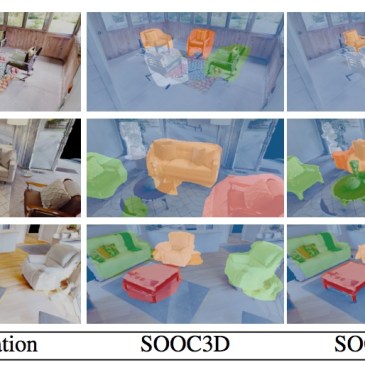
My phd student has just released a paper on 3D Object-Centric Learning on arXiv. I am pretty proud of the work, although I really only understand around 40% of it. Here’s the abstract: We tackle the task of scalable unsupervised object-centric representation learning on 3D scenes. Existing approaches to object-centric representation learning show limitations in … More Variational Inference for Scalable 3D Object-centric Learning

A Simple Definition of Artificial Intelligence

There are many different definitions of Artificial Intelligence in the literature, all are suggestive and insightful. However, at the end of the day, I think there is really one simple enough to be understood and formalised rigorously. This is John McCarthy’s original definition of AI from 1955: “the science and engineering of making intelligent machines”. … More A Simple Definition of Artificial Intelligence

FinTracer and Friends

About 5 years ago, Tania Churchill and I assembled a team of researchers and engineers across AUSTRAC and ANU to work on privacy technologies for detecting criminal activities across the financial system, funded by the Fintel Alliance Expansion budget measure, the Investigative Analytics NPP (led by CSIRO’s Data61), and an ANU Translational Fellowship. The overall … More FinTracer and Friends

Split Count and Share: A Differentially Private Set Intersection Cardinality Algorithm

My colleagues Mike Purcell, Kelvin Yang Li and I have a new paper on differentially private set intersection cardinality algorithm accepted at this year’s Uncertainty in Artificial Intelligence conference. Here is the abstract:We describe a simple two-party protocol in which each party contributes a set as input. The output of the protocol is an estimate … More Split Count and Share: A Differentially Private Set Intersection Cardinality Algorithm